



All of the databases scanned in the previous article were non-cloud and installed in Oracle Virtual box but they were all standard edition or XE / Free versions so similar. They were also vanilla databases in that they had no applications installed and were also not hardened or changed so although each database is different they were similar enough in terms of how they are created to make a meaningful comparison.
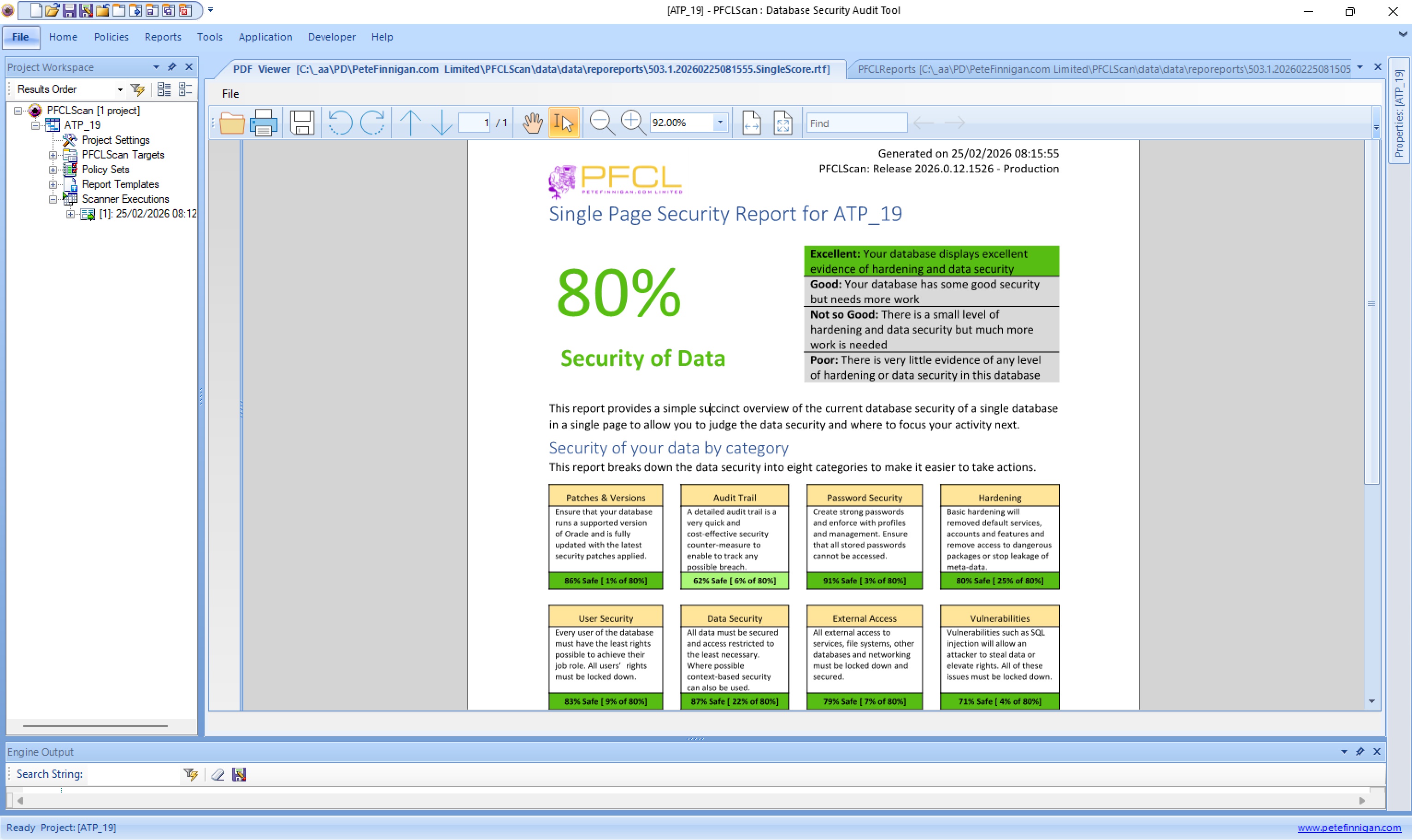
There are obvious differences between ATP and normal on-premise multitenant database. In ATP we cannot log into SYS or the Operating System or use build in roles such as DBA and we have to use ADMIN as the default DBA account. We also cannot access SYS.USER$ to get password hashes to crack passwords in the ATP databases. So password cracking is not done in these ATP databases as we simply cannot do it.
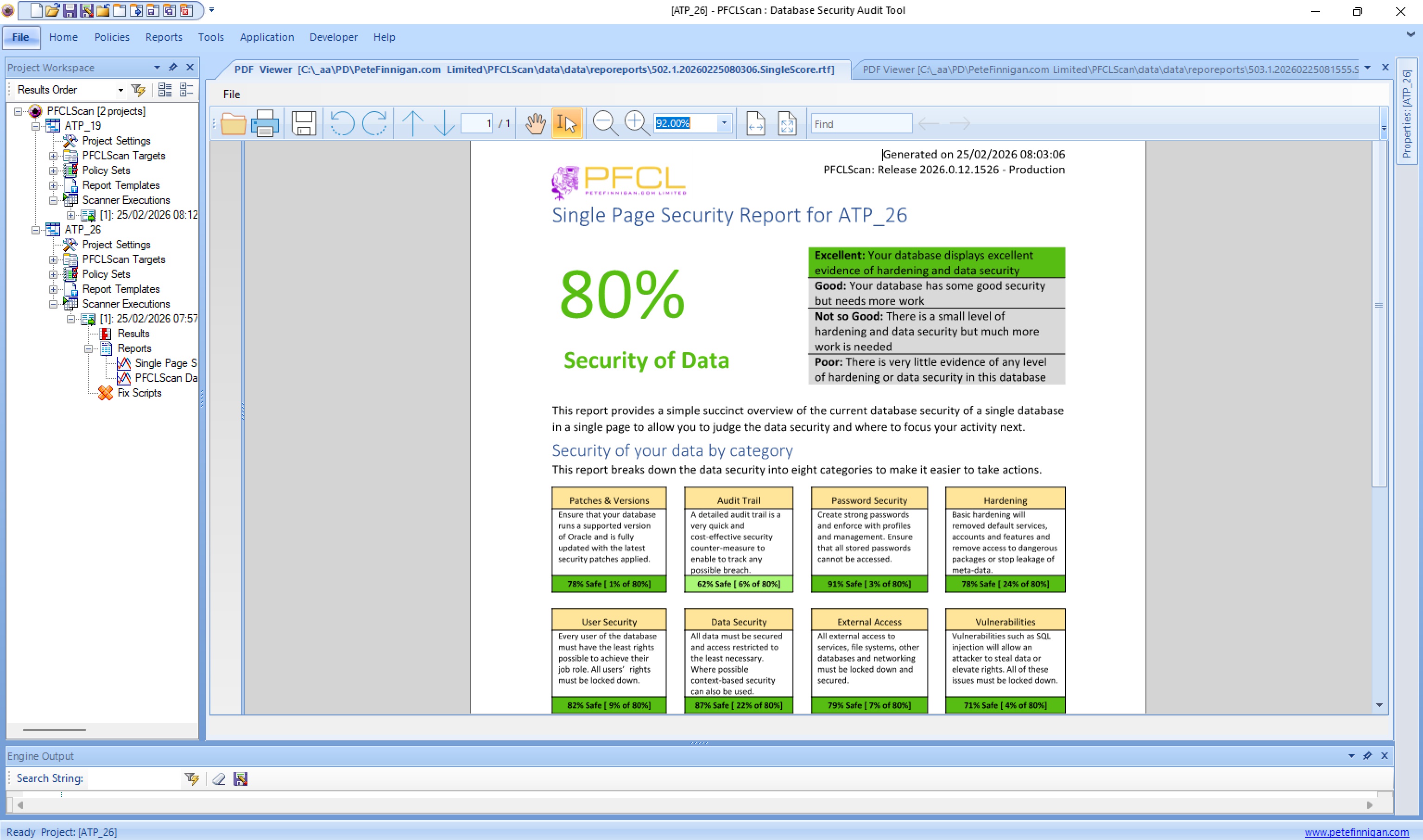
In terms of overall score as you can see both scored 80%. In the previous study the best overall scores were 12c with 80% and 18c with 83%, then it dropped off. Interestingly the overall score for 19c in ATP is better than the older 19c I security scanned in 2024.
If we look at the individual category scores for the 19c and 26ai ATP databases there is little difference between each category except for patches and versions where 23ai scored 78% but 19c scored 86%; the rest of the 8 categories are within 1% or equal. If you look back at the previous article there was little consistency across each database and category.
Overall since 11g the security increased overall until 12c/18c and the went down through 19c, 21c and 23c/ai. The ATP databases have improved the overall score and most strikingly the security of 19c and 26ai in the cloud is consistent and almost identical. Consistency is important.
Ask me for more details of PFCLScan version 2025 and the upcoming version 2026 and ask for me to demonstrate the product live to you on webex or simply ask me if you would like to buy a license or if you would like us to audit your database for you.
#oracleace #sym_42 #ukoug #oracle #database #security #securityscan #vulnerabilities #datasecurity #databreach #datahacking #lockdown